Friday, 24 November 2017

Eagle Annual 001 (1951) Hulton Press


The Eagle Annual was published from 1951 to 1975, outlasting its parent publication 
by several years.
Early annuals had identical, uniform covers aside from the number (as did the annuals of sister publications Girl, Swift and Robin), but from 1961 this practice was abandoned. 
One of the artists working on the annuals was Ian Kennedy. 
Following the New Eagle's launch in 1982, a new series of Eagle Annuals appeared dated from 
1983 to 1992. 
There were also two Best of Eagle Annuals featuring material from the 1950s and 1960s. All of the annuals featured Dan Dare. 


Published by : Hulton Press Ltd, London in 1951

Edited by : Marcus Morris

Dimensions : 21.5cm x 26.5cm with 176 pages.

Selected highlights:

    Dan Dare's story is entitled : Mars 1997
    Riders of the Range have a Brush with Indians
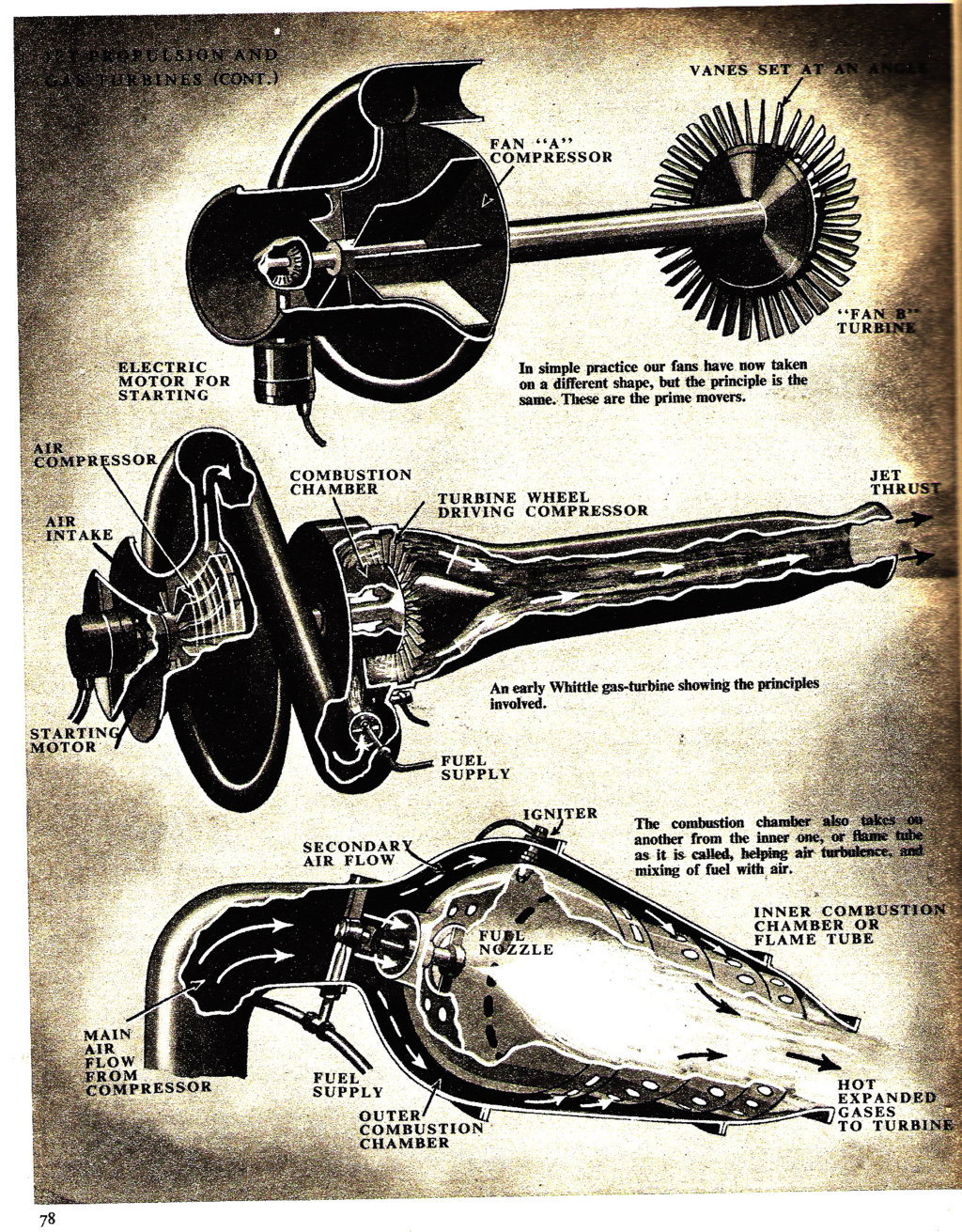
    Learn all about Jet-proplusion and Gas Turbines
    Chicko takes a nap

Contents
  
Stories 
                
   058  Survey 21
   085  Old Coppernob
   100  Uncle George's Aeroplane
   109  The Stolen Lorry Ride
   139  Kidnapped In Error
   158  The Sign Of Three

Adventure Strips 

   025  Dan Dare
   041  Black Dirk
   063  P.C. 49
   081  Riders Of The Range Humorous Strips 
   073  Harris Tweed
   120  Tobias and the Trumpet

   071  Chicko
   062  Grandpa
   138  Grandpa

Sport 
                 
   008  The Lure of Speed
   115  The Olympic Games
   127  Improve Your Football

Science 
   038  If You Want To Be An Inventor
   077  Jet Propulsion & Gas Turbine Engines
   090  The Story Of Oil
   106  Railway With The Speed Of Aircraft
   164  Professor Brittain Explains Coal

Real Life Adventures 

014  Here Lies Gold
   033  How I Didn't Catch A Tunny - And How A Whale Nearly Caught Me
   149  The Story Of Albert Schweitzer
   168  Exploring At The Bottom Of The World Hobbies 
   051  How To Rebuild A Model Railway
   067  Rearing Silkworms
   072  Make This Jet-Powered Dart
   153  How To Make "Whirling Willy" - A Hunting Boomerang
   154  Unusual Pets - And How To Keep Them

Interest 

    020  The Story Of The Circus
   132  Nature Adventure
   145  It Wouldn't Be Christmas...
   056  Puzzles A-Plenty...
   173  Answers To Puzzles A-Plenty...
   037  Did You Know...


Links ⇓⇓⇓    Eagle Annual 001 (1950) (Text) - Eagle Annual 001 (1951)

Tuesday, 21 November 2017

Sun #102 #129 #130-131 #133 #135 Amalgamated Press, 1949 Series


 The Sun (originally simply Sun) was comic launched on 11 November 1947 
by publisher J. B. Allen, changing from weekly to fortnightly during its run. 
It had previously been a health magazine called Fitness and Sun. 

1947 Series
Publication Dates: 1947 – 1949
Number of Issues Published: 41 (#1 – #41)
Color: Red & Green Front Cover; Red & Green Back Cover; Red & Green Centrefold;
Black & White Interior
Dimensions: 91/2″x 121/4″
Paper Stock: Newsprint
Binding: Loose Pages
Publishing Format: Was ongoing series

More information about this collection, here


Link ⇊⇊ Sun #102  #129  #130-131  #133 #135 

Sunday, 19 November 2017

Prince Valiant - Sunday Strips Collection 1937 - 1938 - King Features


PRINCE VALIANT
Original Medium: Newspaper comics
Distributed by: King Features
First Appeared: 1937
Creator: Hal Foster

Hal Foster, the creator of comics' most famous 5th-century adventurer, got his start in comics doing the Tarzan Sunday page. He left it as soon as he was able to launch a series of his own. King Features began distributing his Sunday-only Prince Valiant on February 13, 1937, and still does so today.

Val was a small child when the strip began, and the first several stories told of his boyhood exploits in the British fens where his father, the deposed king of Thule, had made a home in exile. In one memorable 1937 episode, he met an old hag named Horrit, who prophesied a life of adventure for him, but never contentment. To lend credence to her pronouncement, she added that great sorrow lay in his immediate future; and when Val arrived home, he found his mother had died. Horrit's prophesy was to haunt Val all his life.

The "adventure" part of the prophesy came true almost immediately. That same year, Val met Sir Gawain, Sir Launcelot, and King Arthur himself, and was performing such knightly deeds as slaying dragons and rescuing fair maidens. In 1938, he acquired his famous Singing Sword; in 1939 he was knighted by King Arthur, and in 1940, he engineered the restoration of his father as king of Thule.


In 1946, Val married the fair Aleta, Queen of the Misty Isles. Almost immediately, she was kidnapped and taken out to sea. Val pursued relentlessly past the Shetland Islands, the Faroes, Iceland, Greenland, Newfoundland, and right up the St. Lawrence River, finally catching up at Niagara Falls, a thousand years before Columbus. Their first son, Arn, was born in America, in 1947.

Val and Aleta would eventually have four more children. The twins, Karen and Valeta, were born in 1951, Galan in 1962, and Nathan in 1979. Arn grew up to lead his own expedition to America in 1964. Val became a grandfather when, in 1987, Arn and his wife, Maeve, daughter of Sir Mordred, had their first child.

The high adventure and excitement of Prince Valiant was recognized by the National Cartoonists' Society, which, in 1957, gave Foster its highest honor, the Reuben Award. Many other honors followed, including recognition by the U.S. Postal Service, which, in 1995, included Val, along with The Katzenjammer Kids, Bringing Up Father, Little Orphan Annie and 16 others in its "Comic Strip Classics" series of commemorative stamps.


Val's first comic book appearance came in 1939, when he joined the cast of Ace Comics, which also included Krazy Kat, Blondie and several other King Features strips. He held that position until 1948. In 1941, he headlined an issue of the comic book Feature Book. Both of these venues featured reprints of the newspaper strip, as did a much later comic book published by Pioneer Press.

20th Century Fox made Prince Valiant into a feature film, starring Robert Wagner in the title role, in 1954. That same year, the movie was adapted into comic book form by Dell Comics — his first comic book appearance that was not a reprint of the newspaper strip. This sparked a sporadic series of Dell comic books (seven in all), drawn by Bob Fuji, the last of which appeared in 1958. Also in the '50s, a series of books from Crown Publishers used Foster's art to illustrate prose, simplified from Foster's own stories, by Max Trell (Dick's Adventures in Dreamland).


In 1991, an animated version, The Legend of Prince Valiant, became a regular feature on The Family Channel, with the voices of Robby Benson as Val and Tim Curry as Sir Gawain. A second live-action version was made in Britain, and released there in 1997.


In 1970, Foster, by then suffering from arthritis, began thinking of retirement, and allowed several artists to draw Sunday pages before choosing his permanent replacement. In 1971, he chose John Cullen Murphy, whose previous credits include a sports strip entitled Big Ben Bolt. After turning the art over to Murphy, Foster continued to write the strip until 1980. Murphy used several writers since Foster's retirement, finally settling on his son ,Cullen Murphy. Foster died in 1982.

John Cullen Murphy retired in March, 2004, and died in July of the same year. Cullen Murphy still writes the series (which is carried in about 300 papers). The current artist is Gary Gianni, who has illustrated deluxe new editions of several 19th century classic novels, in addition to his credits at Dark Horse, DC Comics and elsewhere.

Today, the Prince Valiant strip is the subject of two reprint series. Manuscript Press has done its first three years in an ultra-deluxe edition for $150 per year. And in the popularly-priced range, Fantagraphics books has reprinted all of the strip's Foster years in a handsome series of volumes, which ran well into Murphy's tenure.  — DDM


Prince Valiant - Sunday Strips Collection 
(1937 - 1938)


196 pages.   Courtesy of  Old Comic World.blogspot


link⇓⇓

Friday, 17 November 2017

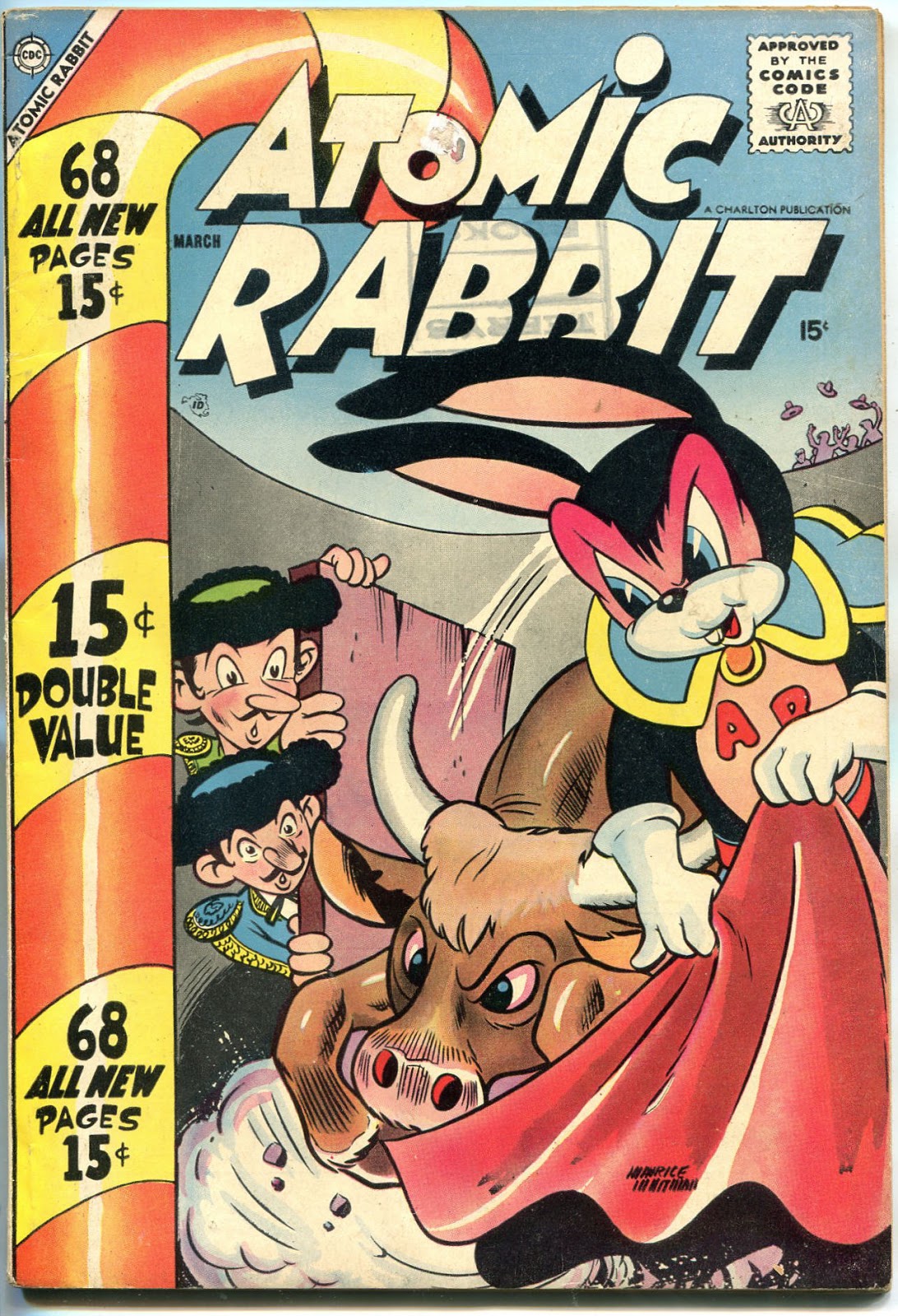
Atomic Rabbit #01 - #11 (1955- 1958) Atomic Bunny #12 - #19 (1958-1959) Complete Series [Charlton Comics Collection]


Atomic Rabbit #01 - #11 Aug 1955 - Mar 1958

Publication Dates:

  Publication history  August 1955 - March 1958 
Number of Issues Published:    11 (#1 - #11) 
Color:   Color 
Creator: Al Fago
Dimensions:   Standard Silver Age US 
Paper Stock:  Glossy cover; newsprint interior 
Binding: Saddle-stitched 
Publishing Format:   Was Ongoing 
Publication Type:  magazine
Pages 36     Indicia Frequency bimonthly

Authors: 

Pencils: Al Fago (signed) | Inks: Al Fago (signed)

Tracking

    numbering continues with Atomic Bunny #12 - #19 (Charlton, 1958 series)

Atomic Rabbit was a funny animal comic book series created in 1955 by Al Fago, following his success with Atomic Mouse from Charlton Comics. The story originates with a lonely and starving rabbit that inadvertently gains super powers by eating a radioactive carrot laced with uranium.

With the departure of Al Fago, the series was renamed Atomic Bunny in August 1958 and continued with artwork by Pat Masulli until 1960.

In 1996, American Comics Group announced the return of Atomic Rabbit, reprinted from the original proofs along with reprints of Peter Rabbit by Fago's younger brother Vincent.


Funny animal superheroes have been a part of the animation and comic book scenes since the days of Mighty Mouse and Supermouse, respectively — almost as long as human superheroes have been around, in fact. Marvel had Super Rabbit, DC had The Terrific Whatzit, Fox had Cosmo Cat etc. But the biggest concentration of the sub-genre was at Charlton Comics during the 1950s, which had Hoppy the Magic Bunny, Atom the Cat, and several others — in fact, its longest-lasting superhero title ever was Atomic Mouse. What Magazine Enterprises (Red Mask, Presto Kid) was to western heroes with secret identities, Charlton was to funny animal superheroes.

Atomic Mouse may owe his longevity to the fact that he was created by Al Fago (Neddy Bear, Timmy the Timid Ghost). While Charlton, with its low production costs and in-house distribution, was able to make a success of many properties with little apparent reader interest, such as Black Fury and Cheyenne Kid, Fago had a way of connecting with kids. Atomic Rabbit wasn't as successful, but he had the same advantage. Fago wrote and drew his stories, too.


Atomic Rabbit was a lot like Atomic Mouse, but with a species change and a couple less supporting characters. He protected Rabbitville, rather than Mouseville, from the depredations of Sly Fox, rather than Count Gatto. Instead of an inept assistant, Sly had two kids.


He, too, got his super powers from doubly-forbidden fruit by today's standards — drugs and radiation. But while both their power-enhancers were as radioactive as can be, Mouse's was more blatantly a drug. He got his super powers from U-235 pills, whereas Rabbit's U-235 carrots could be passed off as good nutrition, like Atomictot's vitamins and Popeye's spinach. But while Popeye of the E.C. Segar comics ate lots of spinach for strength through nutrition, the animated Popeye treated it like a drug, getting a huge rush from it and sometimes, just for emphasis, sucking it in through his pipe. Good nutrition or not, Atomic Rabbit definitely fell into the category of drug-based superheroes.


Fago handled Atomic Rabbit from his first appearance, dated August, 1955, through the end of the series under that name — #11, dated March, 1958. As of #12, it was changed to Atomic Bunny, and it's not certain they're the same character. Bunny looked like Rabbit in the first issue, tho drawn by Charlton's editor, Pat Masulli, but his appearance changed radically after that. Then, he was back to his former appearance with the last issue (December, 1959).


A Fago story was reprinted by Norlen Publications in 1959, Comics entrepreneur Roger Broughten, who now owns most of the old Charlton properties, published Atomic Rabbit & Friends as a oneshot in the 1990s.


Whether Charlton published one lagomorphic hero or two, it's been out of the funny animal superhero business for decades.   — DDM [www.toonopedia.com]


Atomic Bunny  #12 - 19 (1958-1959)

Publication Dates:

Publication history August 1958 - December 1959 
Number of Issues Published:    8 (#12 - #19) 
Color: Color
Dimensions: Standard Silver Age US 
Paper Stock:  Glossy cover; newsprint interior   
Binding: Saddle-stitched    
Publishing Format:    Was Ongoing 
Publication Type:   magazine 
Pages 36     Indicia Frequency Quarterly

Authors: 

Script: Joe Gill? | Pencils: George Wildman,  Pat Masulli (signed) |
Inks: George Wildman | Letters: Jon D'Agostino

Tracking

    numbering continues from Atomic Rabbit (Charlton, 1955 series) #11 


 Links ⇲⇲ Atomic Rabbit #1 - 11, Atomic Bunny  #12 - 19 


Thursday, 16 November 2017

Garth Ennis' Battler Britton #4 (2006) - WildStorm Productions


Battler Britton (2006) - #4
"Bloody Good Show Part Four"

WildStorm (DC Comics)

Britton and Gilhooley are reconnoitering to investigate for signs of German ground forces where the former was attacked by flak, but are without any luck. They are then chance upon by German Messerschmitt 109s. Briton rams into a 109's wing and is force to bail out. He is almost shot by a 109 under his parachute but only to be save by Gilhooley, who is also shot down and makes a emergency landing. Upon landing, Britton rush to Gilhooley's plane and quickly takes the Major out of the cockpit before it is destroyed by an 109. The two are stranded in the desert.

At L.G. 242, the 309 and the 107th receives word from L.G. 303 about Britton and Gilhooley's reconnaissance and are declared missing. Taff ask permission from Colonel Masters in conducting an immediate search with an observer, but is struck down by Captain Anderson who reason that it is getting dark in less than an hour and they wouldn't have a chance in finding Britton and Gilhooley while flying blind until at first light.


As the sun sets, Britton and Gilhooley are trekking eastward to their L.G. Britton notice that those German fighters were trying hard to kill them whereas they normally have their ground forces to pick them up but didn't. He suspects that they are hiding something around in the desert which adds to the mystery of Britton's flak attack. As night engulfs them, Britton and Gilhooley walks blindly in the dark until they find themselves stumbling into a German tank. Britton and Gilhooley silently run up a sand dune. As the moon come out they see a large column of German armor and infantry encampment covered in desert camouflage. Britton realizes this German force are preparing to launch a surprise offensive against the Allied forces which will put them in a crucial position. He tells Gilhooley that they need to communicate with their squadrons to take out the tanks, in which he intends on using the German encampment's radio.

[http://dc.wikia.com]

 Writer:  Garth Ennis        Penciller: Colin Wilson

Inker: Colin Wilson          Colorist: Jeromy N. Cox

Lettere: Rob Leigh

Editor: Scott Dunbier  & Kristy Quinn

Cover Artist: Garry Leach         Cover Date: December 2006

Cover Price: US $ 2.99
Issue Tagline: None.

Format: Color; Standard Comic Issue; 32 pages


Link⇓⇓ 

Tuesday, 14 November 2017

The Cisco Kid #03 (Cisco Kid Collection)


The Cisco Kid #3
Publication Dates: January 1951 – October-December [1958]
Number of Issues Published: 40 (#2 – #41)
Color: Color
Publication April 1951 | Price: 0.10 USD | Pages: 36

Featuring Cisco Kid
Content Genre: Western-frontier


Comic Story Western Trails (1 page)
Credits Pencils: Bob Jenney | Inks: Bob Jenney
Content Genre: Western-frontier
Notes inside front cover


Comic Story The Silent Killer (22 pages)
Featuring Cisco Kid
Credits Pencils: Bob Jenney | Inks: Bob Jenney
Content Genre: Western-frontier


Comic Story Double Failure (10 pages)
Featuring Cisco Kid
Credits Pencils: Bob Jenney | Inks: Bob Jenney
Content Genre: Western-frontier


Comic Story Winchester Gunfighter (1 page)
Credits Pencils: Bob Jenney | Inks: Bob Jenney
Content Genre: Western-frontier
Notes inside back cover


Comic Story Buffalo (1 page)
Credits Pencils:? (photo from American Museum of Natural History, New York) | Inks:? (photo from American Museum of Natural History, New York)
Content Genre: Western-frontier
Notes back cover


Sunday, 12 November 2017

Garth Ennis' Battler Britton #3 (2006) - WildStorm Productions

Battler Britton (2006) - #3
"Bloody Good Show Part Three"

WildStorm (DC Comics)

The 399 and the 107th are in the middle of a dogfight in which Captain Anderson is shot down and is force to parachute. Noticing that there are German ground forces that are approaching for Anderson, Britton flies down his Beaufighter to pick up Anderson while the 399 provide covering fire. Britton narrowly escape with Anderson on board, who is grateful for the rescue.

The squadrons return to base where Britton earn some recognition from Major Gilhooley and as well bridging a mutual respect between the Americans and the British. As a result Anderson invite Britton and his men to the mess hall for a drink.

The next day the 399 and the 107th are on their next flight. Suddenly, Britton is shot by flak in which one of his engines is destroyed and his gunner Mick is severely wounded. He is forced to fly back. Gilhooley notice Battler and flies after him. Battler request him to rejoin his squadron but Gilhooley doesn't. Britton makes a emergency landing in a hidden British airfield, L.G. 303 where the ground crew sees to Mick, who almost die from blood loss.

Britton reunites with Gilhooley and introduce him to the ground crew led by Squadron Leader Terry Harding and that the airfield they are in is the closest to see Mick's medical attention. Also, Britton is curious about the flak he encountered as the Germans had nothing in that area that he was shot, wondering if the Germans don't want anyone to see. Britton return to his flight on a Hawker Hurricane with Gilhooley as his wingman. Mick later learns that Britton is flying with Gilhooley, in which he tells Harding about the two cannot abide one another. He wonders the possibility that Britton and Gilhooley would likely kill each other, but Harding thinks otherwise.
[http://dc.wikia.com]

 Writer:  Garth Ennis       Penciller: Colin Wilson

Inker: Colin Wilson        Colorist: Jeromy N. Cox

Lettere: Rob Leigh

Editor: Scott Dunbier  & Kristy Quinn

Cover Artist: Garry Leach        
Cover Date: November 2006
Cover Price: US $ 2.99
Issue Tagline: None.

Format: Color; Standard Comic Issue; 32 pages


Link⇓⇓ 

Related Posts Plugin for WordPress, Blogger...